

































































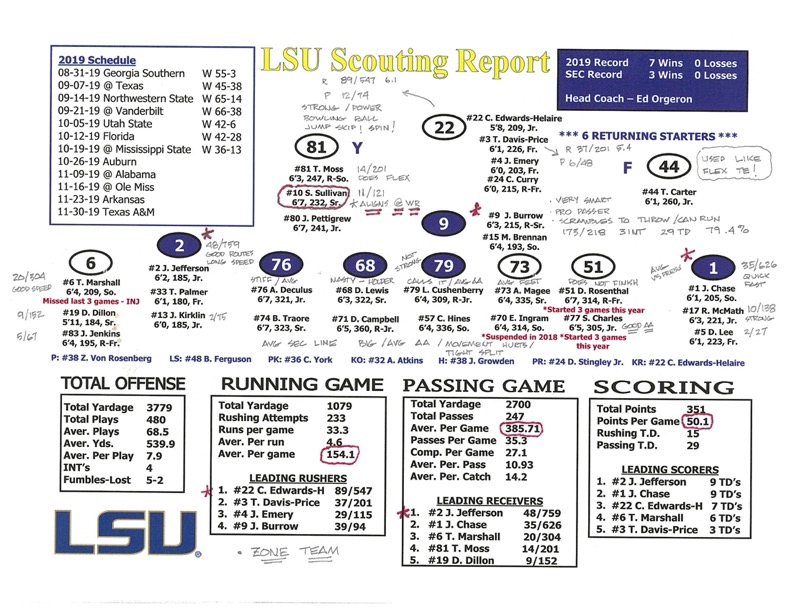
In 2019, the LSU offense seemed unstoppable. From a defensive perspective, it was the toughest challenge our players and staff faced in the 2019 season and arguably the most demanding game plan in Kevin Steele’s tenure at Auburn (2020 Alabama was also unreal).
Heading into game week, Joe Burrow and company were averaging 50.1 points per game and 540 yards of total offense. They were efficient, disciplined, and unbelievably talented. Our weekly Quickie Stats report shown below tells all.
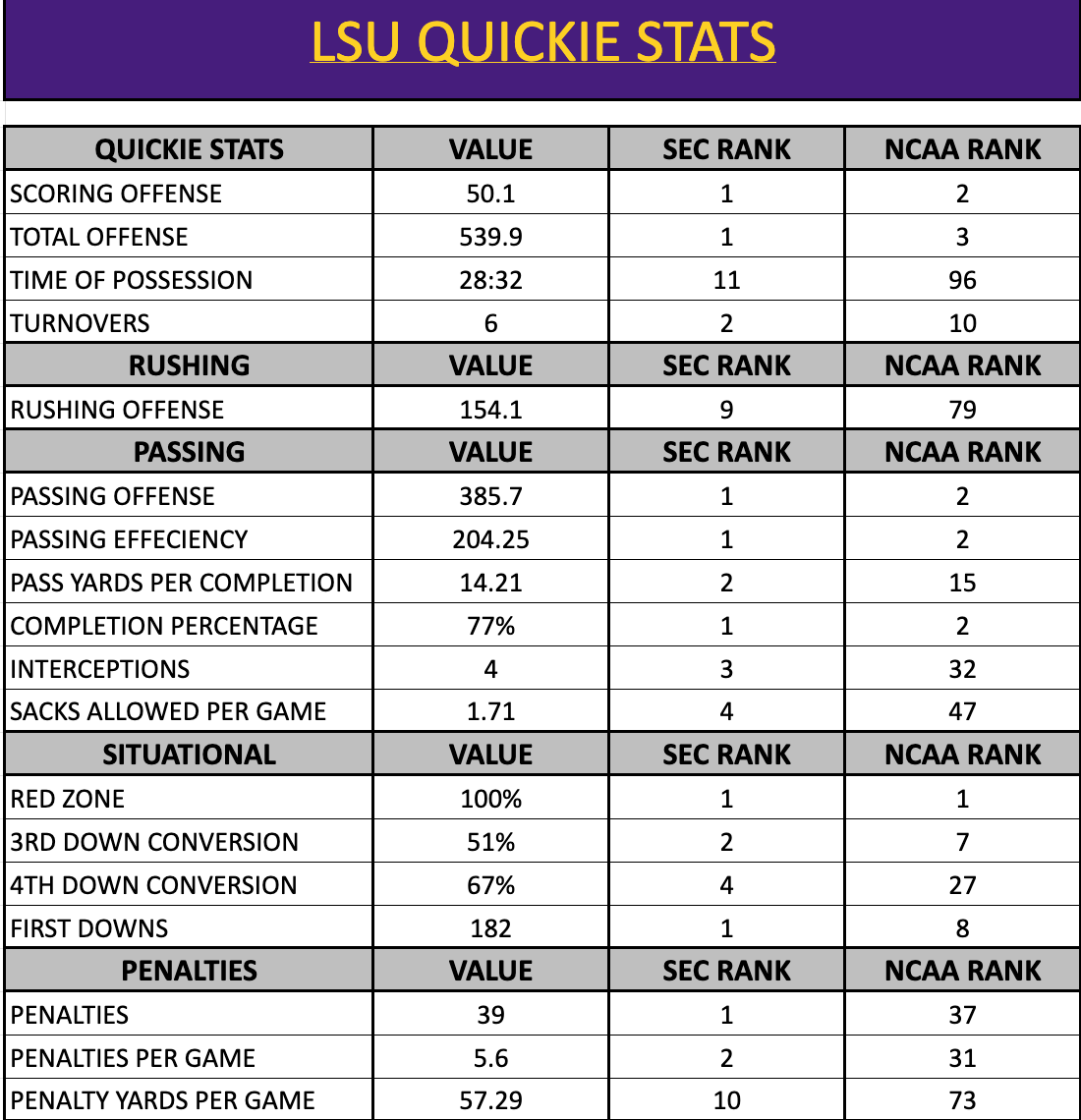
Screenshot from Auburn game-plan vs LSU (2019)
To stop Joe Burrow and the plethora of receivers at LSU’s disposal, a typical game plan wasn’t going to be near good enough. This was a unique task, and to do something special, risk-taking was non-negotiable. In order to appreciate the schematics of the game-plan that was devised that week, it’s important to understand the base defense.
Kevin Steele Defensive Scheme
Kevin Steele’s defensive philosophy very closely mirrors the Nick Saban man-match principles that have become deeply embedded in modern college football. Dan Lanning, Kirby Smart, Brent Venables, Pete Golding, Will Muschamp, and others operate with very similar base terminology and coverages. While each staff layers in its own particular terminology, adjustments, and game-plan wrinkles, the foundation remains consistent.
Personnel and Base Structure
One of the most important contextual points to note is how heavily these defenses rely on Nickel personnel against modern offenses. Versus 11 personnel on offense (1 RB, 1 TE), the defense almost exclusively plays in Nickel, which has become the standard across college football.
In this structure, the defense features:
Four down defensive linemen
Two true linebackers
Four defensive backs
One Nickel defender, commonly referred to as the Star
*highlighted in orange below
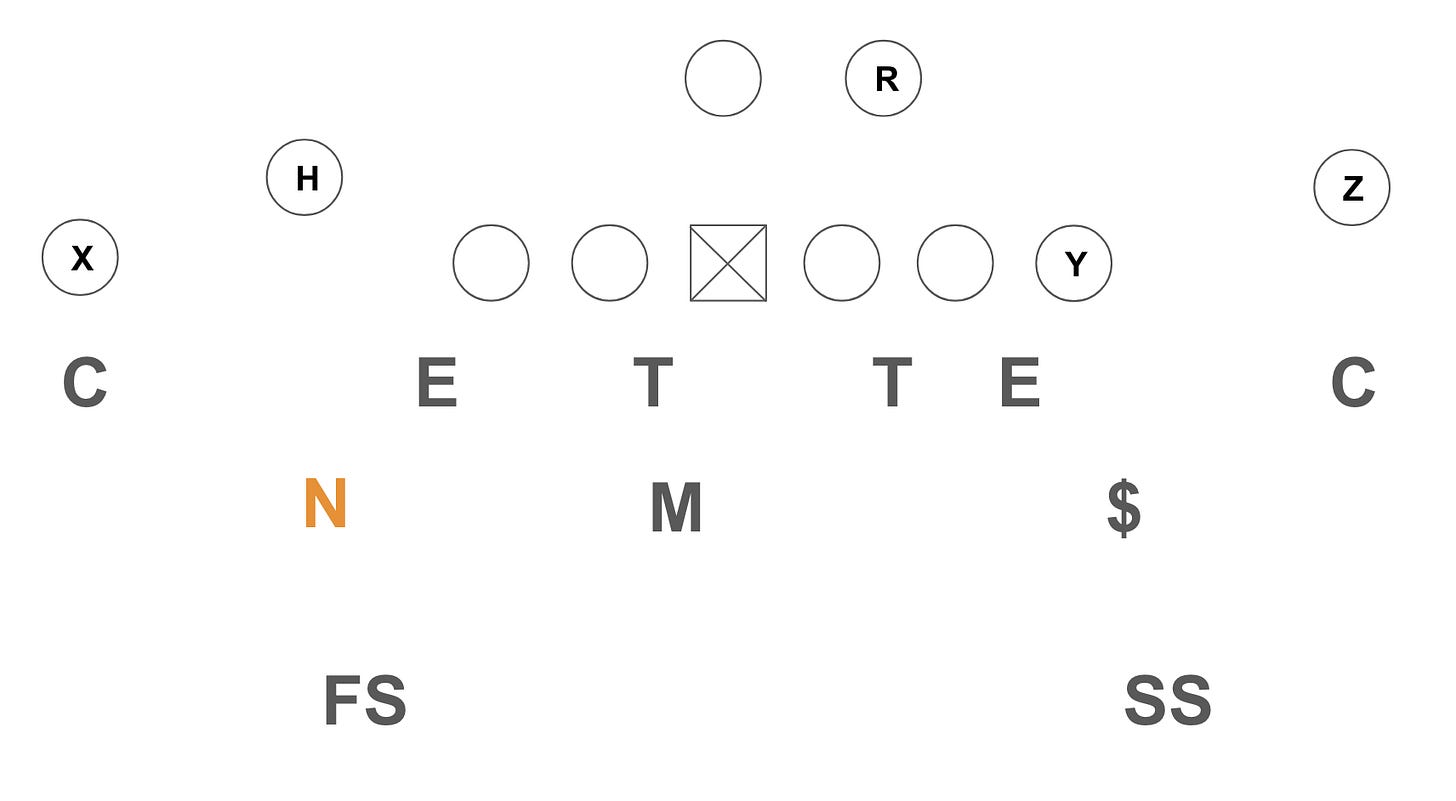
Nickel Defense Example
LSU’s Offensive Personnel
The base defensive setup mentioned above with the Nickel defender is flexible by design — that’s why most defensive coordinators play that way. It allows for them to defend the run well enough and still get creative on the backend in terms of matching routes.
...